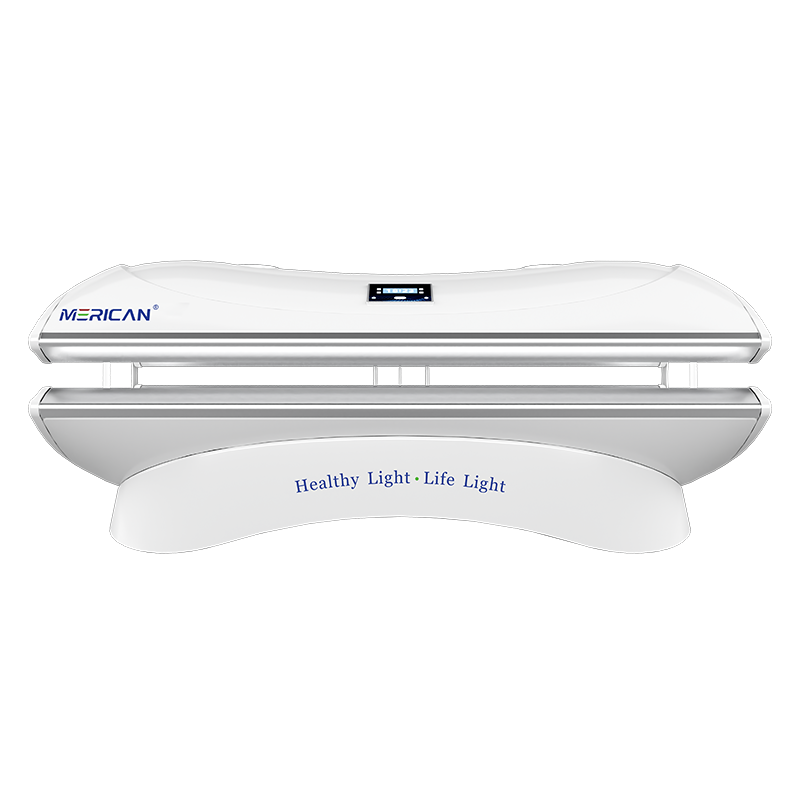
Teiripe solas dearg (RLT)— ar a dtugtar freisin teiripe léasair leibhéal íseal (LLLT) nó fótabiomodulation (PBM)— tá sé tar éis éirí as clinicí spóirt mionlach agus saotharlanna deirmeolaíochta go seomraí folctha baile agus ionaid folláine ar fud an domhain.
Maíonn díograiseoirí go smooths sé wrinkles, luasanna aisghabháil muscle, éascaíonn pian ainsealach, géaraíonn cognaíocht, agus calms fiú aigne restless. Scrúdóimid cad a tharlaíonn i ndáiríre nuair a bhíonn tonnfhaid ar leith de dhearg (≈620–660 nm) agus solas gar-infridhearg (≈810–850 nm) nigh do chuid fíocháin.
Faoi dheireadh, beidh tú in ann gléasanna cuí agus seisiúin dearaidh a roghnú a oireann do do chuid spriocanna - cibé an craiceann geal é sin, pian comhpháirteach laghdaithe, nó go simplí níos lú strus ag deireadh lá hectic.
Photobiomodulation 101: Ó NASA go dtí do sheastán oíche
Stair Achomair
- Fréamhacha spás-aois
Sna 1980í déanacha, Thug taighdeoirí NASA faoi deara go luathaigh soilse dearga cneasaithe créachta i bplandaí agus spásairí a bhí faoi lé díobhálacha microgravity. Spreag an toradh serendipteach seo fiosracht leighis.
- Éabhlóid téarmaíochta
Eolaithe coined teiripe léasair leibhéal íseal sna '90idí, ach toisc go dtáirgeann LEDanna - ní léasair amháin - tonnfhaid theiripeacha, an téarma níos leithne photobiomodulation (grianghraf = solas, beatha = beatha, modhnú = athrú) fuair tarraingt.
- Garspriocanna rialála
Tháinig an chéad fheiste PBM arna imréiteach ag FDA le haghaidh pian mhatánchnámharlaigh isteach 2002. Ó shin i leith, tá feistí nideoige glanta ag gníomhaireachtaí le haghaidh alopecia andraigineach, tendinopathy, agus laghdú wrinkle.
Príomhpharaiméadair Optúla
| Paraiméadar | Raon Folláine tipiciúla | Cén Fáth a bhfuil Tábhacht ag baint leis |
| Tonnfhad (l) | 620-660 nm (dearg), 810-850 nm (NIR) | Socróidh sé doimhneacht treá fíocháin agus cé na crómasóir a ionsúnn fuinneamh. |
| líofacht (J/cm²) | 4–60 J/cm² | Fuinneamh iomlán seachadta - táirgeacht ró-íseal gan aon éifeacht, Is féidir le ró-ard cealla bac. |
| Dlús Cumhachta (mW/cm²) | 10–200 mW/cm² | Higher density = shorter sessions; very high density risks heat. |
| Pulse vs. Continuous | Many panels are continuous; some pulse at 10–1,000 Hz | Pulsing may mimic neuronal firing or nitric-oxide release patterns; evidence is still mixed. |
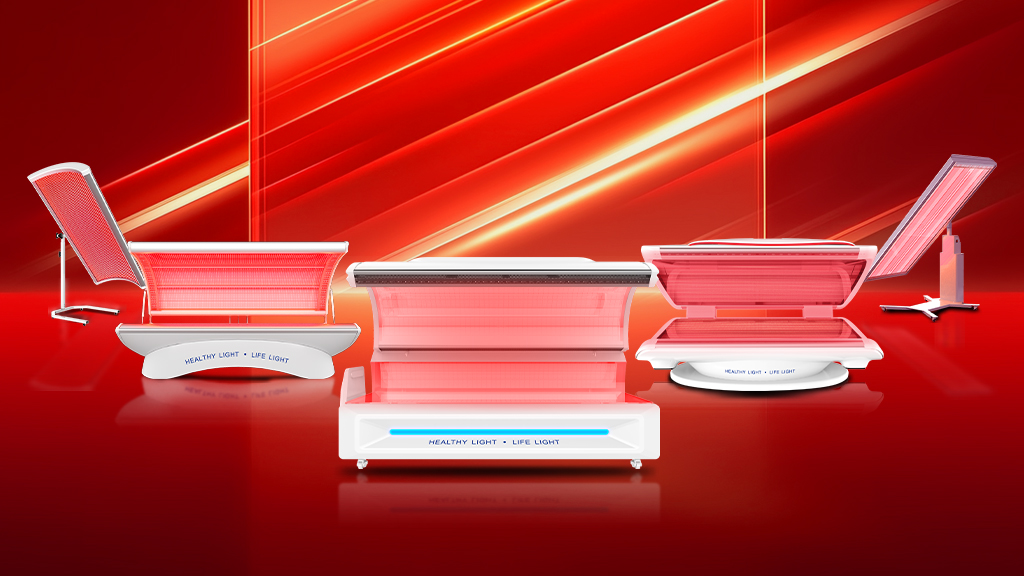
Common Consumer Devices
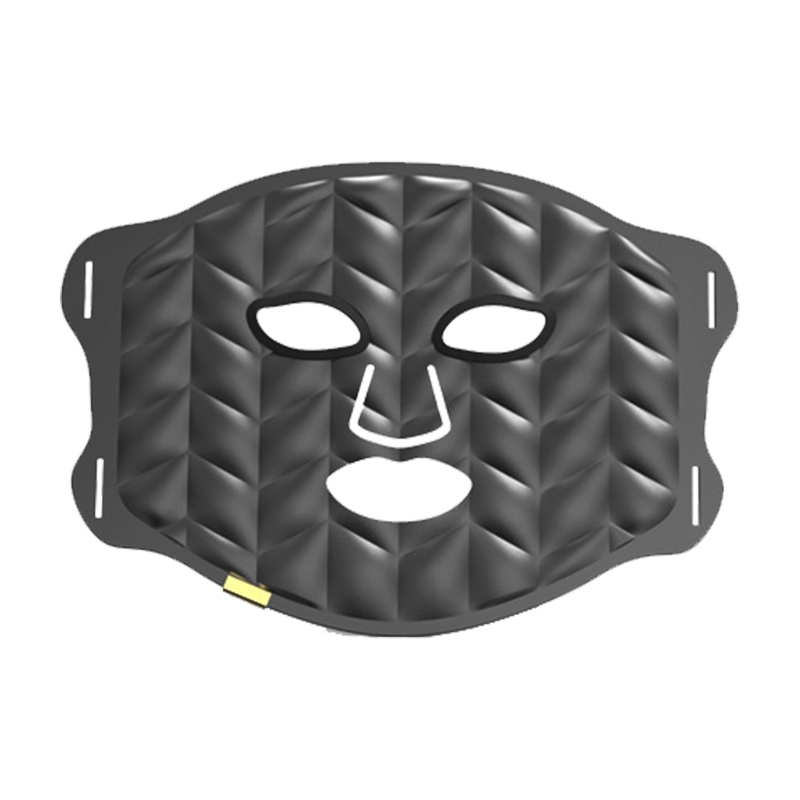
Light therapy for the face (rigid or flexible LED masks)
- Optimized for cosmetic wavelengths (mostly 630–660 nm)
- Fad an tseisiúin: 10–20 min, 3–5× per week
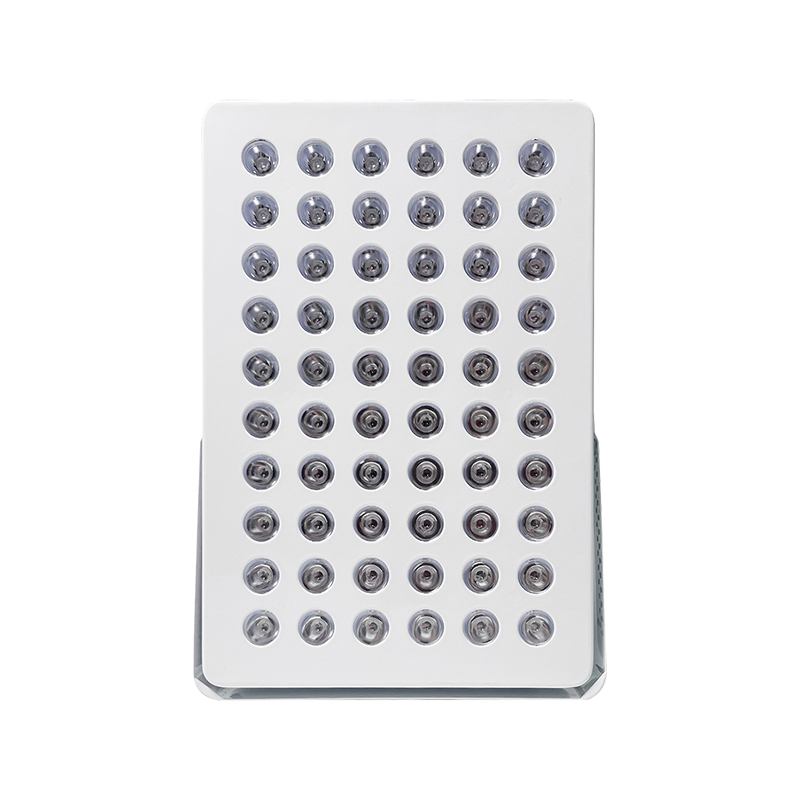
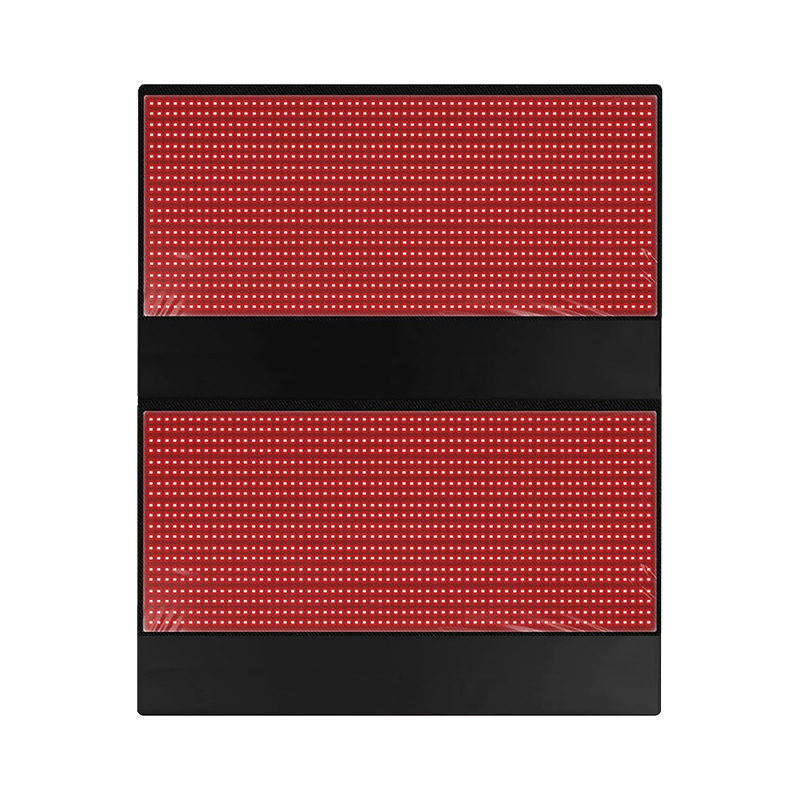
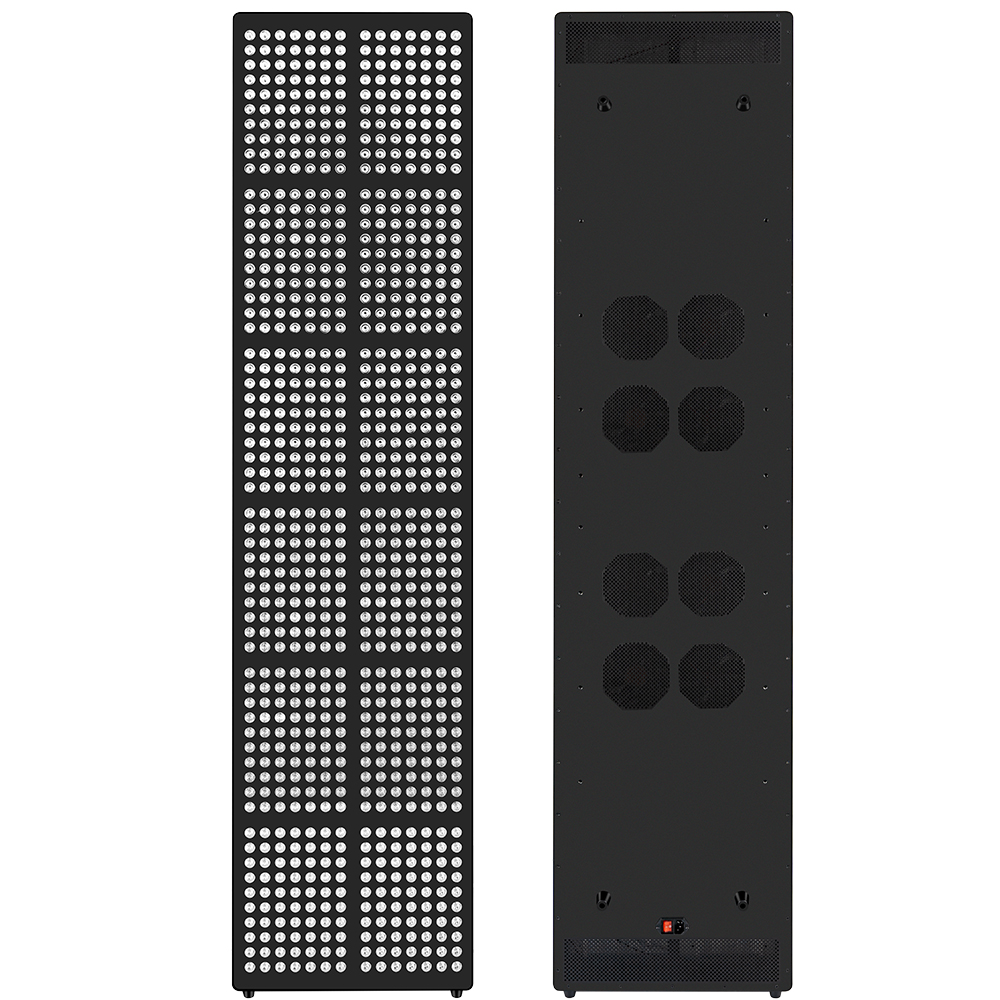
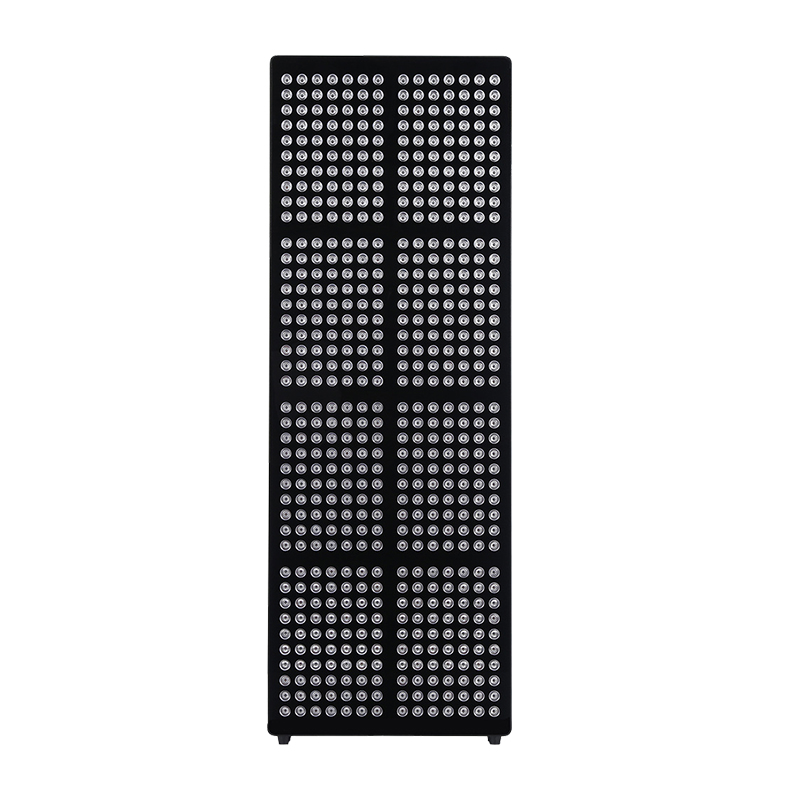
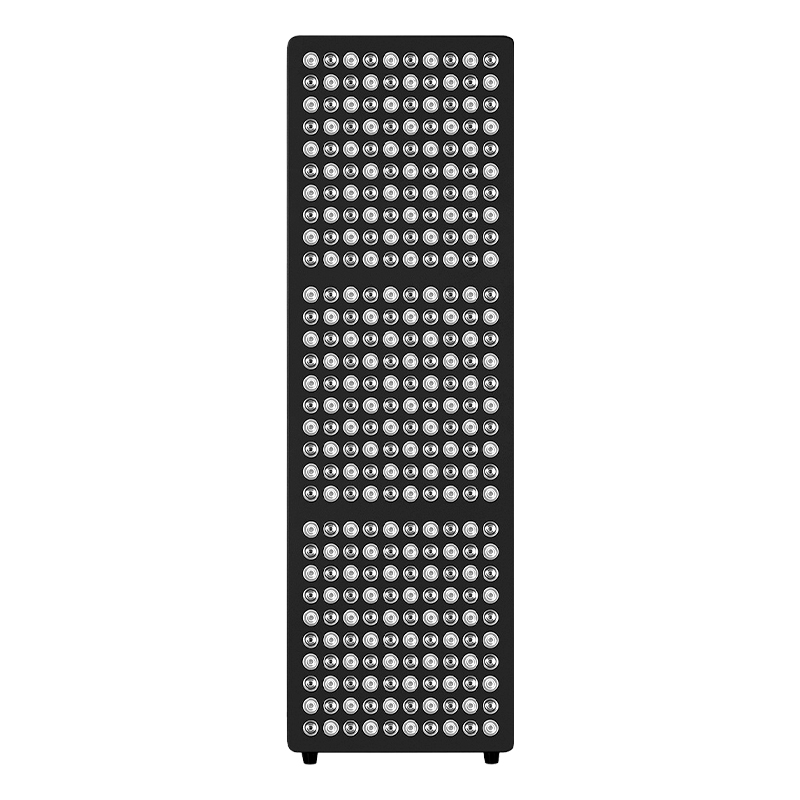
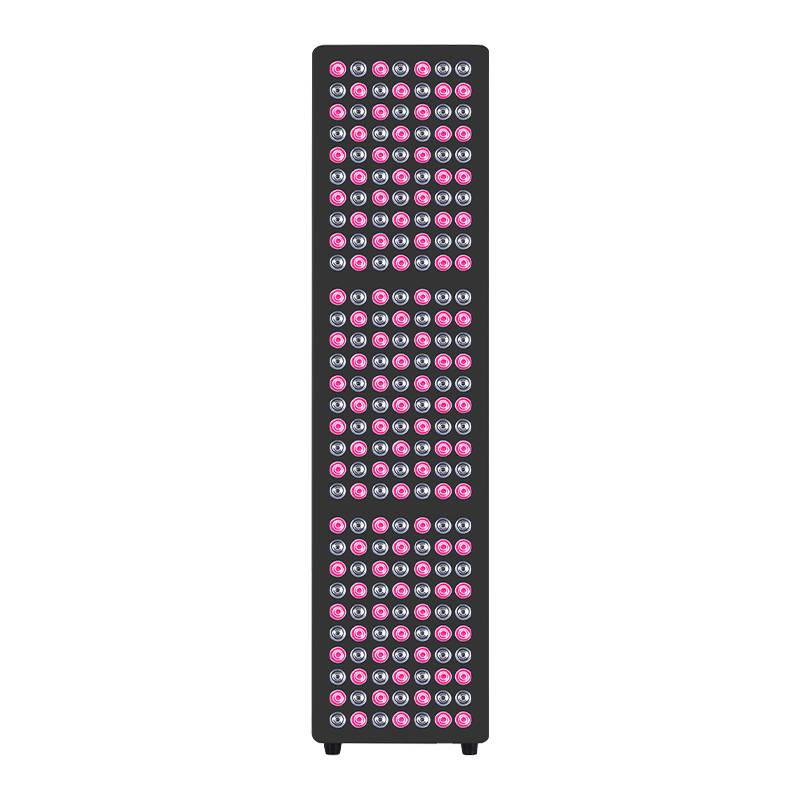
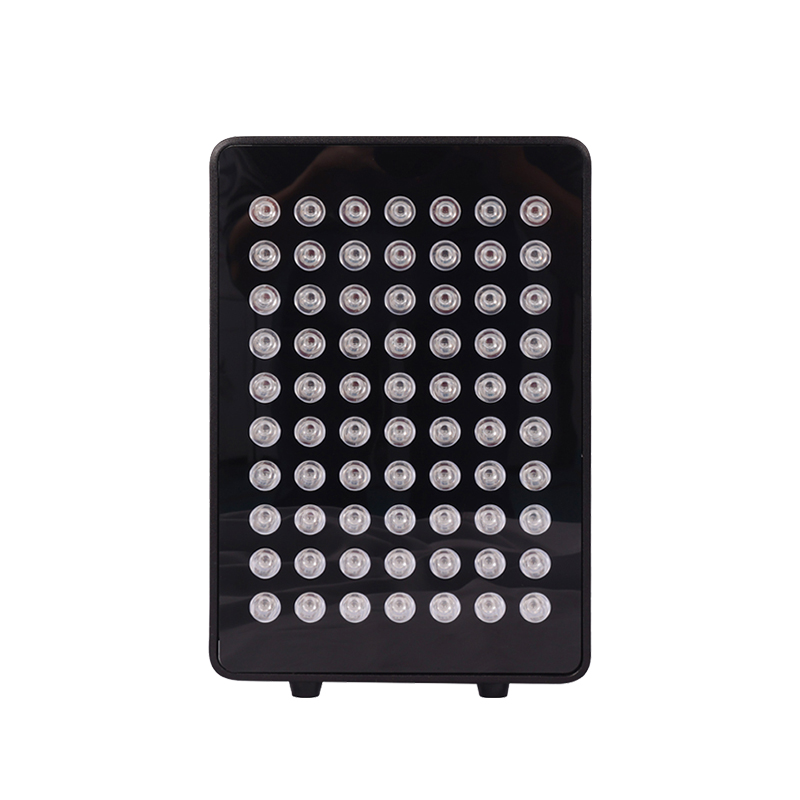
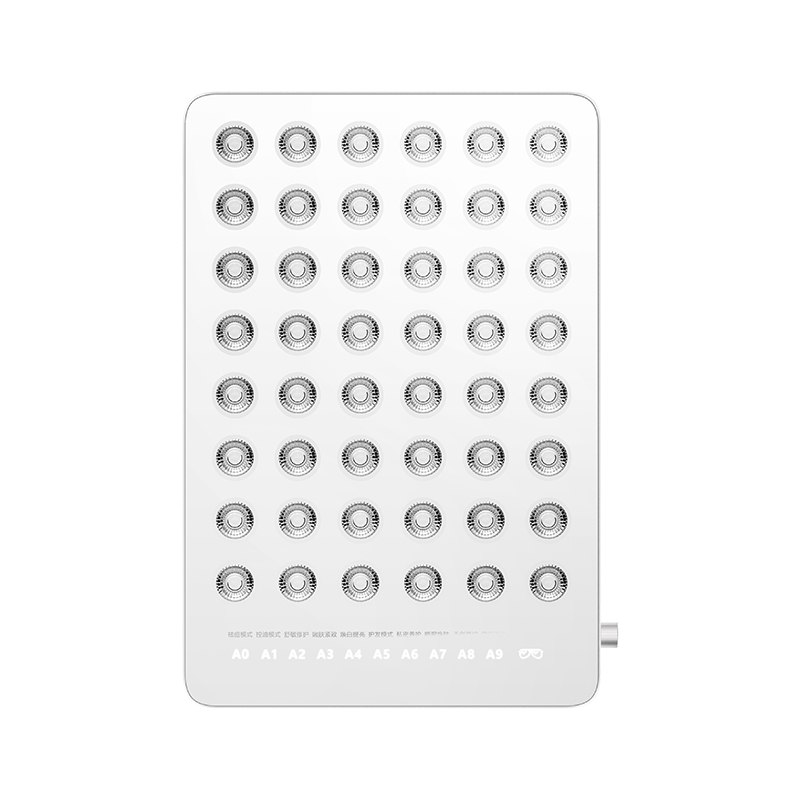
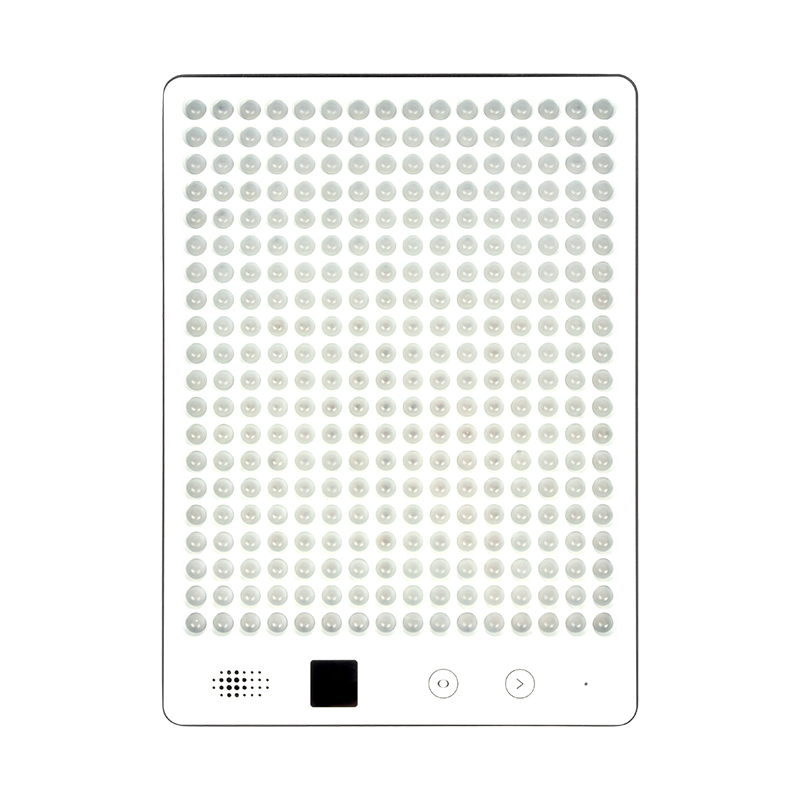
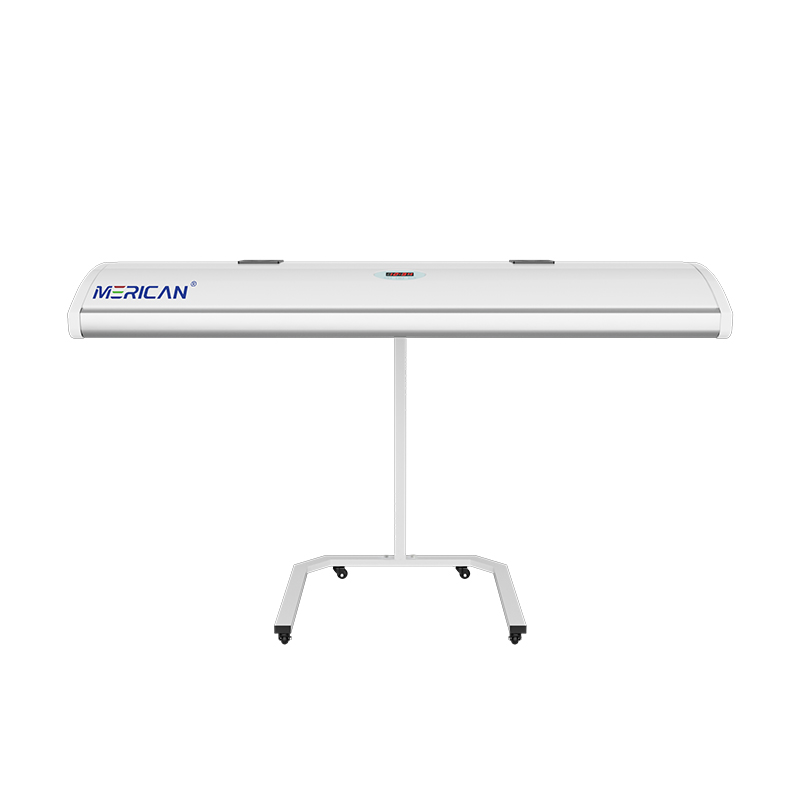
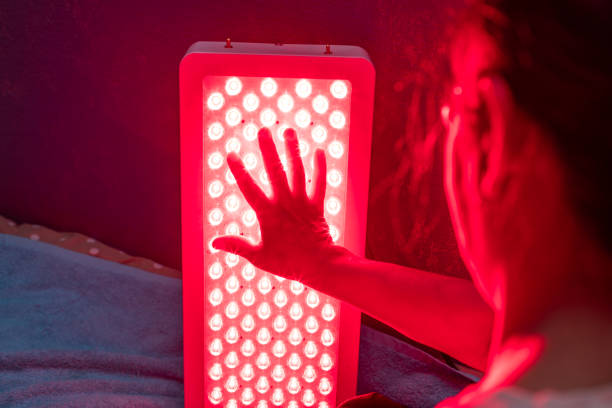
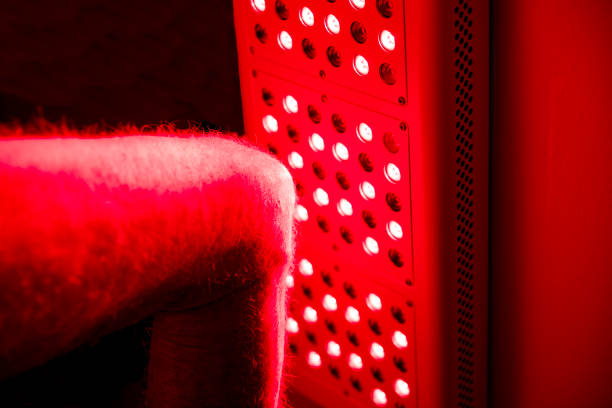
Modular painéil stiúir
- Cover larger body areas; deliver both red and NIR for muscle recovery
- Often hung on doors or used in vertical “light booths”
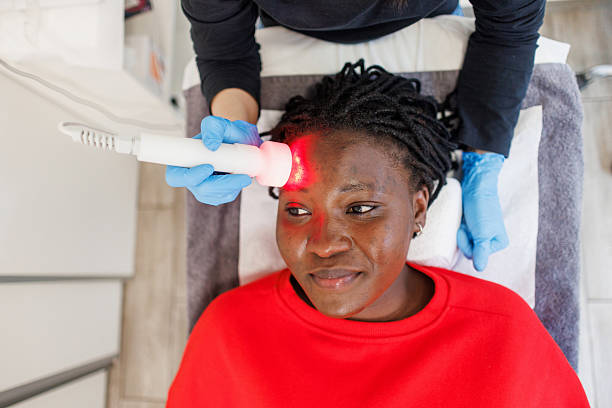
Handheld or “torch” devices
- Concentrated beam for spot treatment—scar tissue, hailt
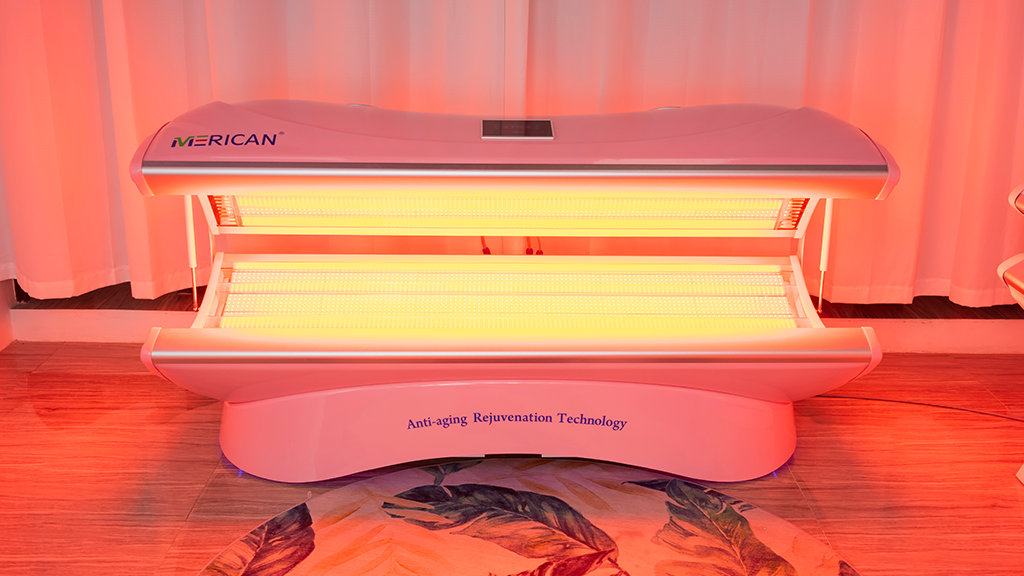
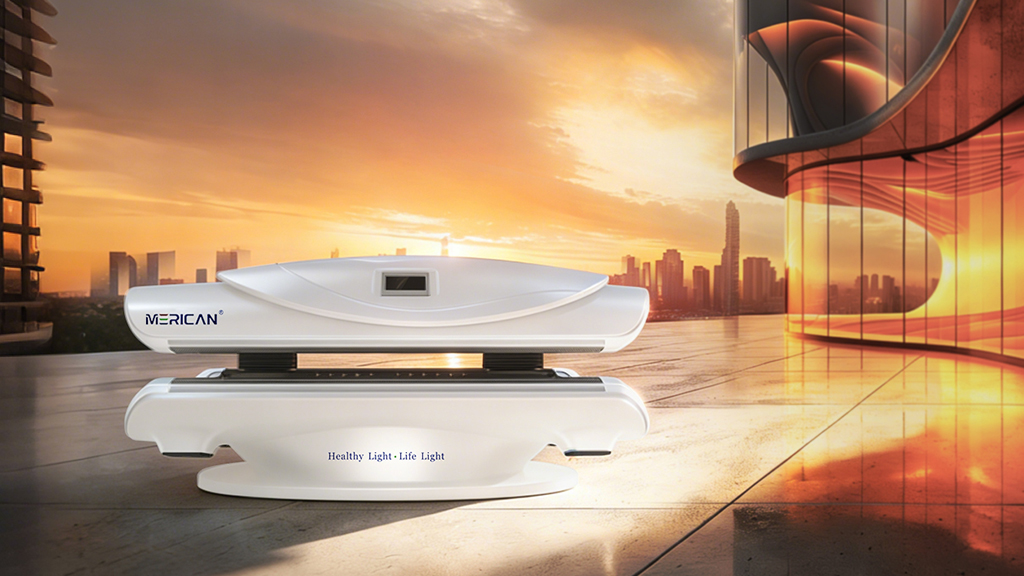
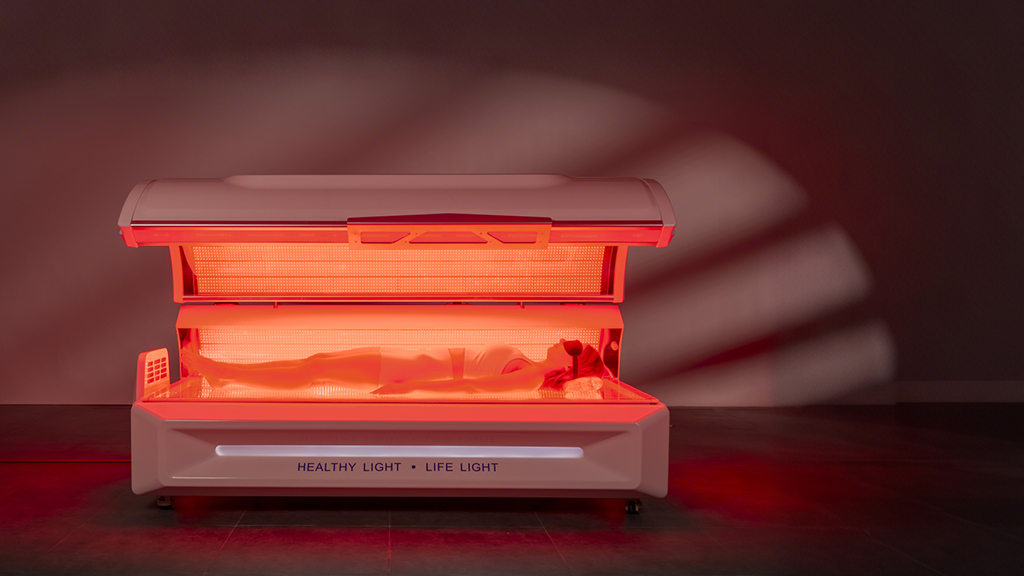
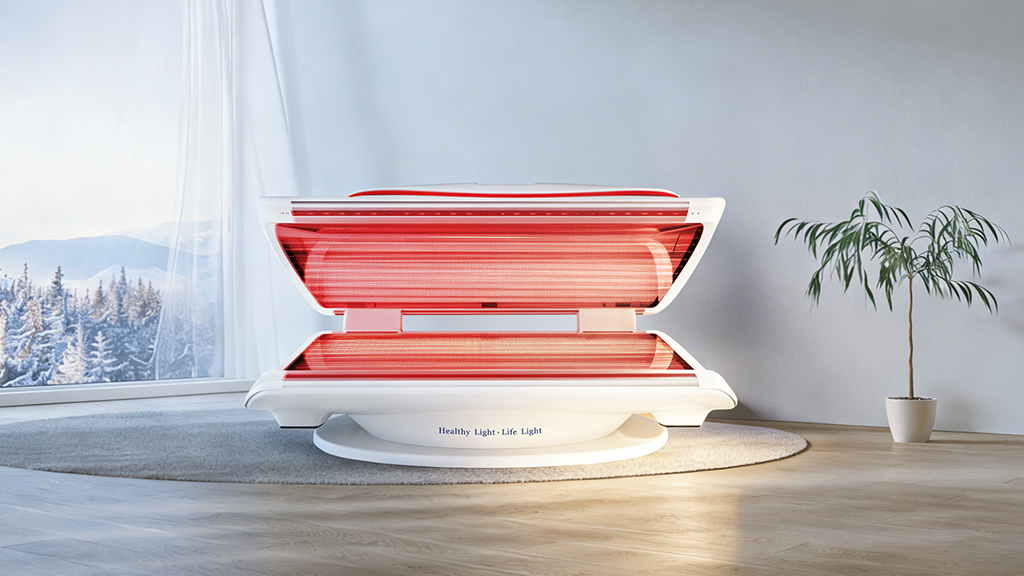
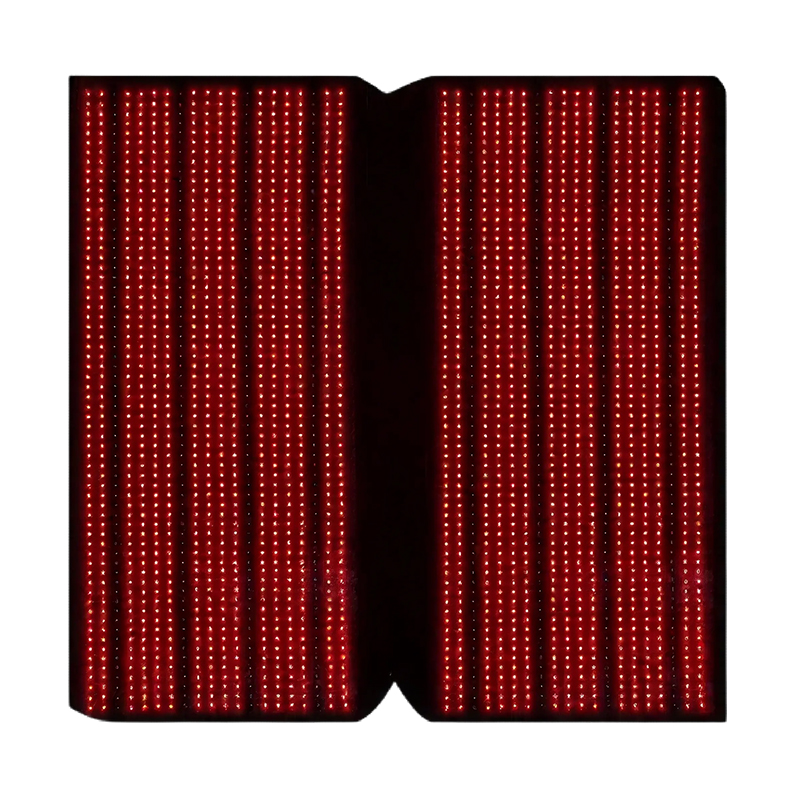
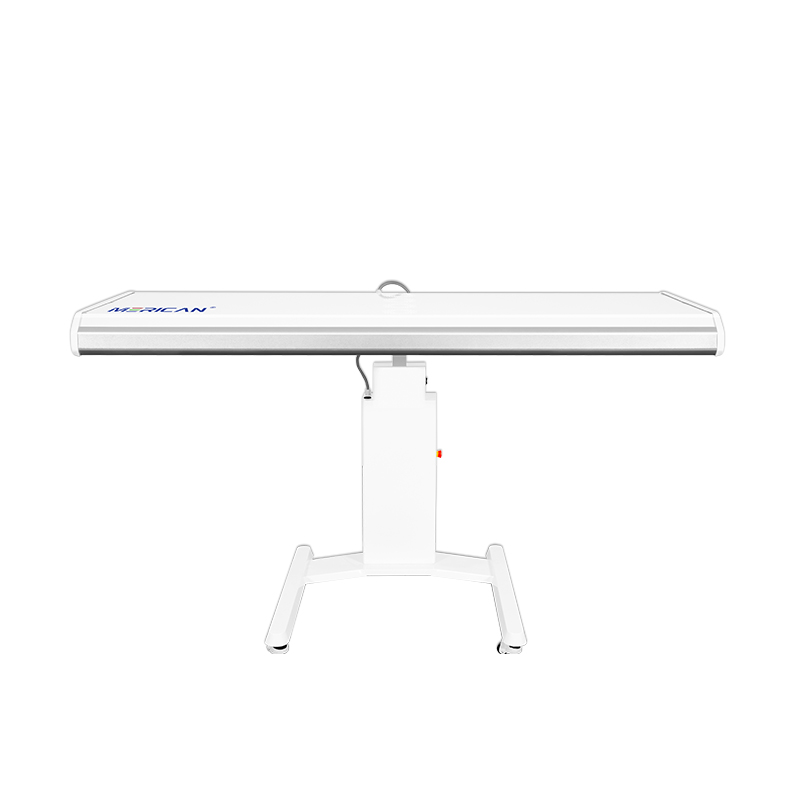
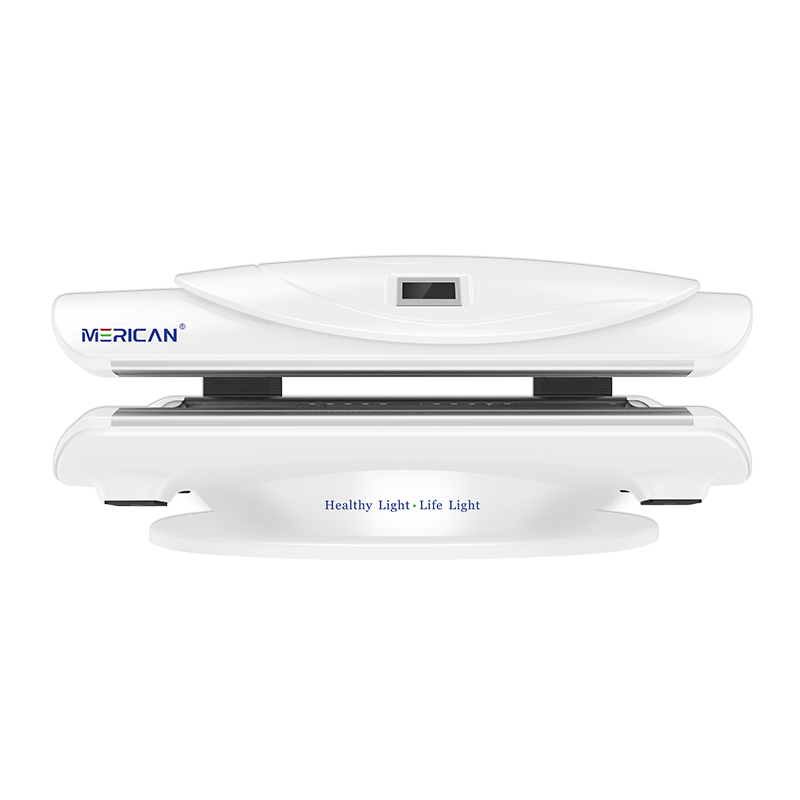
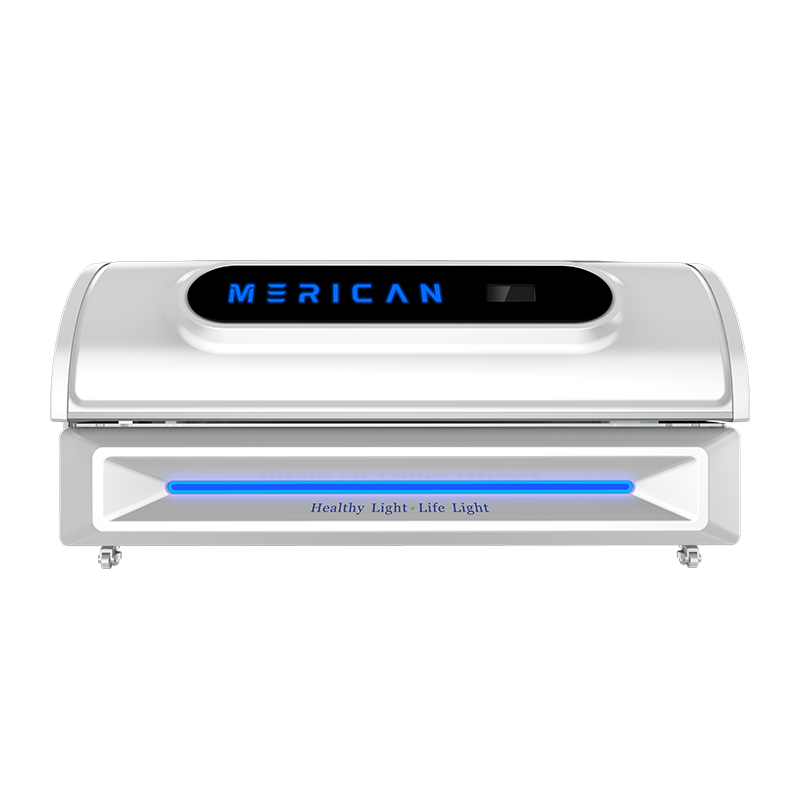
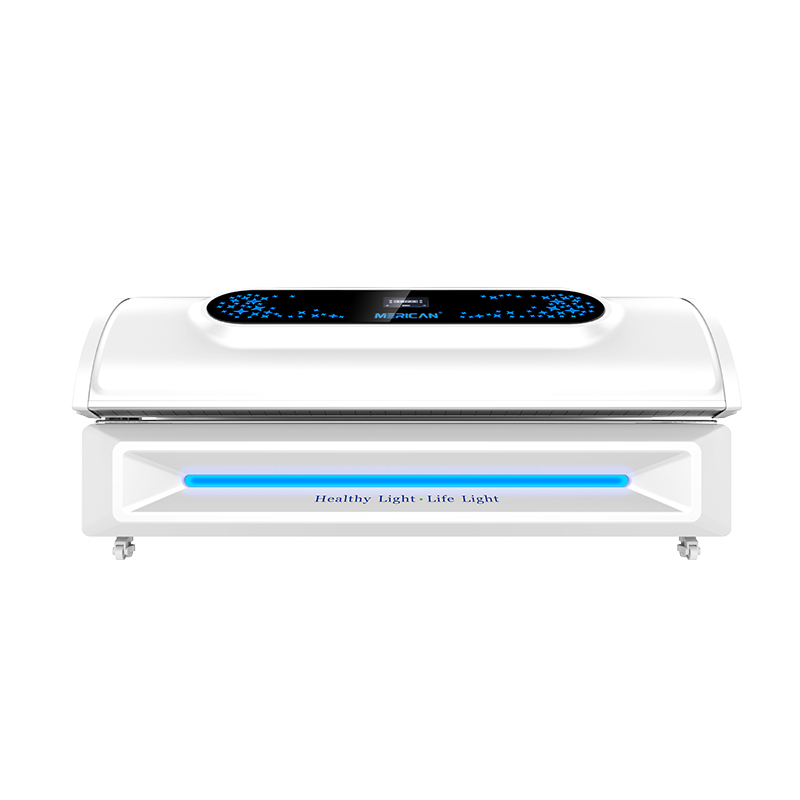
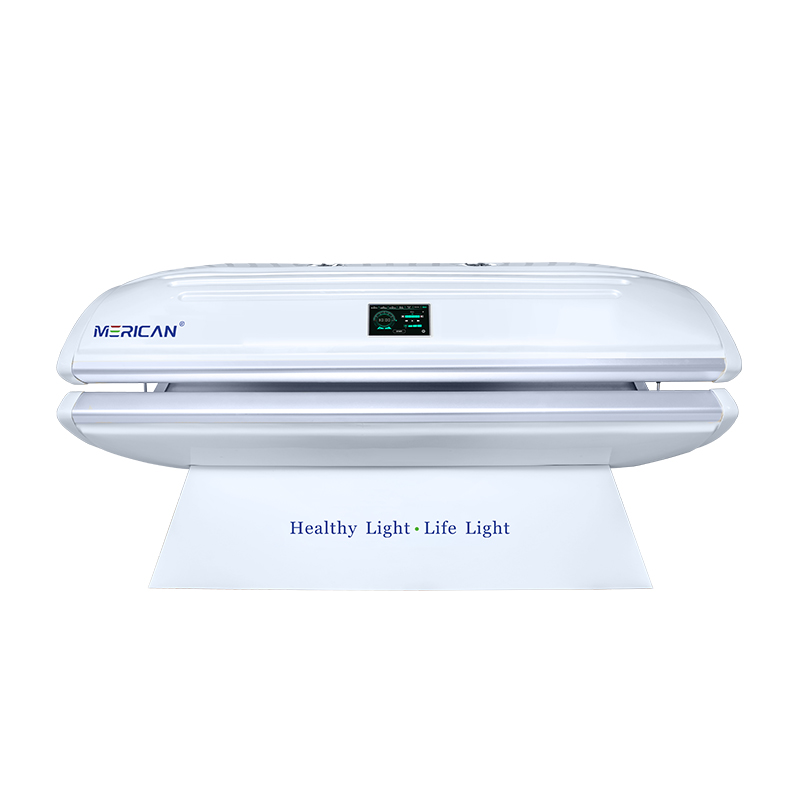
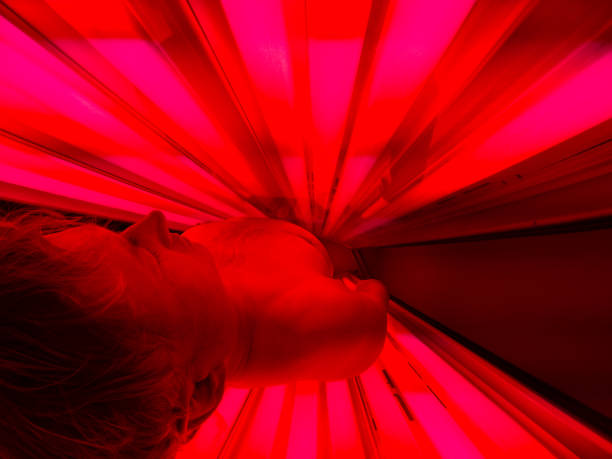
Full-body beds or pods
- Spa-style experience with even irradiation head-to-toe
Conas a Oibríonn Teiripe Solas Dearg?
Photon-to-Biology Cascade
- Absorption by Chromophores
Cytochrome-c oxidase (CcO) in the mitochondrial respiratory chain absorbs red/NIR photons.
Ocsaíd nítreach (NÍL) can be photodissociated from CcO, freeing the enzyme to accelerate electron transport.
- ATP Surge
Faster electron flow elevates proton gradients, boosting ATP synthesis—more cellular “fuel.”
- Speicis Ocsaigin Imoibríocha (ROS) as Signals
Mild, transient ROS rise acts as a messenger, up-regulating antioxidant and repair genes via transcription factors like NF-κB and Nrf2.
- Gene Expression & Growth Factors
Enhanced production of collagen, BDNF (brain-derived neurotrophic factor), and VEGF (vascular endothelial growth factor).
- Systemic Ripple Effects
Improved microcirculation delivers oxygen and nutrients.
Reduced pro-inflammatory cytokines (TNF-α, IL-6).
Modulation of autonomic balance, favoring parasympathetic “rest-and-digest.”
Crossing the Skull: Brain-Focused PBM
Near-infrared wavelengths (800–850 nm) penetrate several centimeters through the scalp and skull. Transcranial photobiomodulation studies show:
- Enhanced cerebral blood flow measured by fMRI and SPECT imaging
- Improved executive function in small trials on traumatic brain injury and bipolar disorder
- Potential increases in prefrontal cortex oxygenation and BDNF, correlating with sharper attention and mood stabilization
Is There Actual Science Behind Red Light Therapy?
Deirmeolaíocht (Strong Evidence)
- Laghdú wrinkle & athmhúnlú collagen
Randomized controlled trials (RCTanna) show 25–50 % wrinkle depth reduction over 8–12 weeks.
Meicníocht: up-regulated procollagen-I mRNA and fibroblast proliferation.
- Acne improvement
Dearg (630 nm) laghdaíonn p. acnes bacterial count; NIR calms sebaceous inflammation.
Musculoskeletal Pain (Moderate-to-Strong)
- Meta-analyses reveal significant pain relief in osteoarthritis, tendinopathy, and low-back pain vs. sham light.
- Reduced NSAID consumption reported in post-operative orthopedic patients.
Cneasú Créachta & Scar Remodeling (Measartha)
- Accelerated epithelial closure in diabetic ulcers and burn wounds.
- Animal studies demonstrate faster collagen alignment and tensile strength recovery.
Red Light Therapy Mental Health Benefits (Promising, Emerging)
- Transcranial PBM improved mood and cognitive processing speed in small trials for major depressive disorder and bipolar disorder
- fMRI shows increased default-mode network connectivity, which may underpin better emotional regulation.
- Early reports suggest red light therapy for stress lowers salivary cortisol by 10–15 % after four weeks of thrice-weekly sessions. Larger trials are underway.
Meitibileach & Cardiovascular Markers (Early Stage)
- Rodent studies indicate improved insulin sensitivity; human data remain preliminary.
- BP reductions (~5 mm Hg) were logged in hypertensive cohorts after 8-week NIR limb exposure.
Weight Management & “Fat Loss” (Weak/Conflicting)
- Some panel vendors market PBM for slimming; small trials show modest waist-circumference changes, but confounders (caloric deficit, vibration plates) muddy causation.
- A recent Wall Street Journal feature warned consumers that hype often exceeds clinical proof
Comprehensive Benefit Breakdown
Craiceann & Aesthetics
- Acne-Prone Skin
Red/blue light masks reduce p. acnes and calm redness. Many users see fewer inflammatory breakouts within four weeks, consistent with clinical findings.
Matáin, Joints & Aisghabháil
- Athlasadh
RLT lowers COX-2 and prostaglandin E2 levels by up to 40%. Athletes report reduced soreness and faster recovery.
NIR light boosts SOX-9 expression in osteoarthritis models, supporting cartilage and slowing degeneration.
- Feidhmíocht
Pre-exercise PBM primes mitochondria, improving peak torque and endurance in controlled cycling tests.
Neurological & Meabhairshláinte
- Meon & Imní
Stimulation of the prefrontal cortex may rebalance alpha-wave activity. Anxiety scores dropped ~30% in early studies, suggesting potential alongside CBT or medication.
- Stress Response
PBM supports parasympathetic activity by reducing evening cortisol and heart-rate variability. Users often report deeper, codladh níos suaimhní.
Codladh & Rithim circadian
- Mealatonin
Murab ionann agus solas gorm, red light may boost melatonin via pineal mitochondria, ag cabhrú sleep onset.
Gruaig & Sláinte Scalp
- Fás Gruaige
RLT prolongs the hair growth phase and improves circulation, increasing shaft thickness and count in clinical trials on androgenic alopecia.
CCanna
Do dermatologists approve of red light therapy?
To achieve the best results for their patients, dermatologists often recommend red light therapy as a complementary treatment. This means it is used alongside conventional therapies as part of a comprehensive treatment plan.
Is there any downside to red light therapy?
Mar sin féin, if red light therapy devices are misused, such as being used too frequently or not according to the instructions, there is a risk of skin or eye irritation, especially if proper protection is not used. Ina theannta sin, the long-term safety of red light therapy devices has not yet been fully established.
Who cannot use red light therapy?
See Section 5 for a full table. In brief, avoid or get physician clearance if you’re pregnant, photosensitive, taking photo-sensitizing meds, have active skin cancer, uncontrolled epilepsy, or recent eye surgery.
Is there actual science behind red light therapy?
Tá. Thousands of peer-reviewed papers span dermatology, pian, neurology, and sports medicine. Is iad torthaí deirmeolaíochta agus mhatánchnámharlaigh na cinn is comhsheasmhaí; tá sonraí inchinne agus meitibileach geallta ach tá trialacha níos mó ag teastáil. Úsáideann staidéir ardcháilíochta rialuithe sham, tonnfhaid sainithe, agus bearta torthaí oibiachtúla.
Cé chomh luath agus a fheicfidh mé torthaí?
- Infheicthe athruithe craiceann: 4-6 seachtaine.
- Faoiseamh pian: Mothaíonn roinnt úsáideoirí níos fearr tar éis 2-3 sheisiún; d’fhéadfadh go mbeadh gá le saincheisteanna ainsealacha 4+ seachtainí.
- Meon & shifts struis: Léiríonn staidéir phíolótacha feabhsuithe tar éis ~8–10 seisiún atá dírithe ar an inchinn.
Conclúid
Léiríonn teiripe solais dhearg go galánta téama lárnach sa leigheas nua-aimseartha: beag, is féidir le noda neamhcheimiceacha aistrithe bitheolaíocha sármhaithe a bhaint amach nuair a bhaineann siad leas as innealra athléimneachta an chomhlachta féin. Ó aschur feabhsaithe ATP go léiriú géine iartheachtacha, Tá meicníochtaí PBM ag éirí níos soiléire. Réimsíonn fianaise chliniciúil ó sheanbhunaithe (laghdú wrinkle, pian comhpháirteach) chun cinn ach spreagúil (teiripe solas dearg sochair mheabhairshláinte, agus teiripe solas dearg le haghaidh strus).
Fós féin, ní draíocht é solas amháin. Tonnfhad ceart, dáileog, agus comhsheasmhacht do-idirbheartaithe, agus ní mór do dhaoine aonair a bhfuil fóta-íogaireacht nó riochtaí leighis áirithe orthu staonadh ó ghairmithe nó dul i gcomhairle leo. Má théann tú chuig PBM le amhras eolach, spriocanna réalaíocha, agus rianú dúthrachtach, is féidir le fótóin a bheith ina n-uirlis phraiticiúil i do fhoireann uirlisí fad saoil agus folláine.